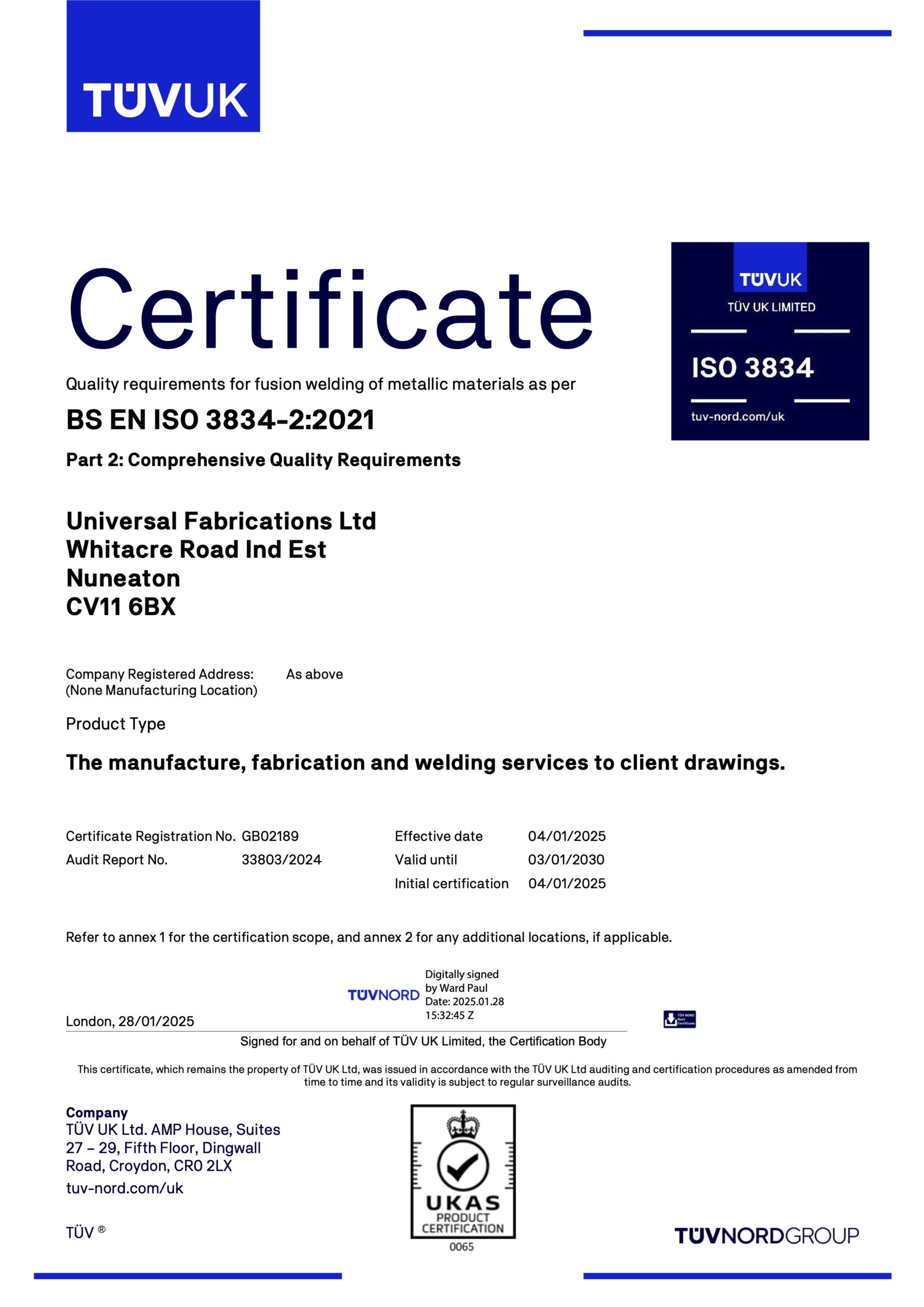

The Engineer’s Guide to Structural Fabrication and Machined Weldments
Structural fabrication – what is it and how is it used?
Structural fabrication is widely used to manufacture vehicle structures, equipment frames, enclosures and structural assemblies across defence, transportation, energy and industrial engineering sectors. Understanding how fabrication, welding and machining processes interact allows engineers to design structures that are strong, dimensionally accurate and efficient to manufacture. The fabrication combines cutting, forming and welding processes to create strong assemblies from plate and structural sections. These assemblies are often then combined with precision machining operations to produce critical interfaces such as mounting surfaces, bearing locations or sealing faces. This combination of fabrication and machining is widely used in sectors including defence vehicles, heavy equipment, energy systems and industrial machinery.
While fabrication provides structural strength and efficient use of material, machining ensures dimensional accuracy where tight tolerances are required. For engineers designing structural components, understanding how these manufacturing processes interact can significantly improve manufacturability, reduce distortion risk and ensure final assemblies meet functional requirements.
Welded fabrication or machining?
Fabrication allows engineers to create large structures efficiently without machining them from solid material. Large machined components require significant amounts of raw material and long machining times. Therefore production timelines, cost and weight become part of the decision making process.
Fabricated structures instead use plate sections that are cut, formed and welded together to create the final geometry. This approach reduces material waste while maintaining structural strength.
Examples of fabricated structures include:
In many cases, fabrication provides the most efficient manufacturing method for large structural components.
How welding influences structural behaviour
Welding introduces localised heat into the material which causes expansion and contraction during the heating and cooling cycle. This thermal movement can create residual stresses within the structure. As welds cool and the material contracts, small dimensional movements can occur. This effect is known as welding distortion. Distortion does not necessarily indicate poor manufacturing quality. It is a natural physical behaviour of welded structures.
Manufacturers manage distortion through several methods, these techniques help maintain alignment during fabrication and minimise structural movement:
Why machining is often required after fabrication
While fabrication creates the primary structure, many assemblies require precision interfaces that must meet tight dimensional tolerances. Examples of this are such features as mounting faces, bearing housings, alignment features and sealing surfaces. Because welding may introduce small dimensional changes, these features are frequently machined after fabrication. Machining ensures that critical surfaces meet tolerance requirements once the structure has stabilised after welding. This hybrid manufacturing approach combines the strength of fabrication with the precision of machining.
Managing distortion in welded structures
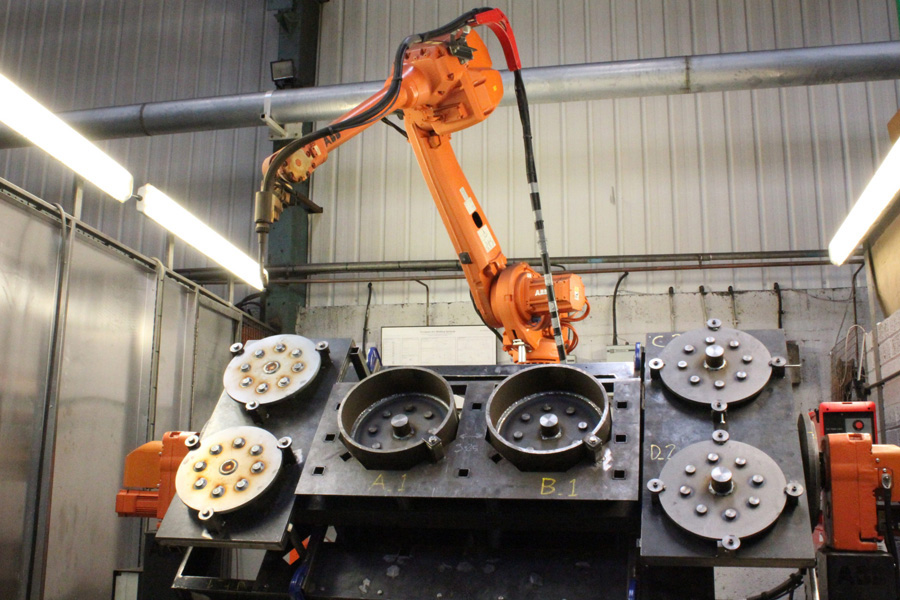
Distortion control is an important aspect of structural fabrication. Manufacturers use several strategies to manage distortion during production. Fabrication fixtures are commonly used to hold components in position while welds are applied. These fixtures maintain alignment and resist movement caused by thermal stresses. Weld sequencing also plays a key role. By carefully planning the order in which welds are applied, heat can be distributed more evenly throughout the structure.
In many cases, critical interfaces are intentionally machined after welding so that final tolerances are achieved regardless of minor structural movement.
Designing structures for manufacturability
Engineers can significantly improve manufacturing outcomes by considering fabrication processes during the design stage.
Design strategies may include:
Collaboration between engineering teams and manufacturing specialists during development often leads to more efficient production and improved structural performance.
Inspection and quality control
Inspection is an essential part of manufacturing structural assemblies. Fabricated structures are typically inspected throughout production to verify dimensional accuracy and structural integrity. Inspection methods may include dimensional measurement using precision instruments, verification of alignment and flatness, weld inspection and material certification and documentation.
Weld inspection types
In terms of weld inspection, it splits into two categories. Non-destructive testing (NDT) checks a weld without damaging it. Destructive testing physically breaks a test sample to see how it holds up. Inspectors use both at different points in the job: before welding starts, while it’s underway, and once it’s finished.
Non destructive testing
Where every weld check starts. An inspector looks over the joint, sometimes with a magnifying glass or a few basic gauges, for cracks, porosity, undercut, or a bead that just doesn’t sit right.
Destructive Testing
These tests aren’t done on the actual finished part, they’re run on test coupons to prove out a welding procedure or check that a welder is qualified.
These key inspection processes ensure fabricated assemblies meet both engineering specifications and quality requirements.
Prototype to production manufacturing
Many structural assemblies begin as prototype components during development programmes. During this stage, engineers may evaluate structural performance, assembly behaviour and manufacturing feasibility. Once designs are validated, production manufacturing requires stable processes that can deliver repeatable results. Manufacturers capable of supporting both prototype and production manufacturing provide continuity during programme development and help reduce supply chain complexity.
Conclusion
Structural fabrication combined with precision machining provides an efficient and reliable manufacturing method for large engineering assemblies. By understanding how welding behaviour, distortion control and machining operations interact, engineers can design structures that achieve both structural strength and dimensional accuracy.
Frequently Asked Questions
What is structural fabrication?
Structural fabrication involves cutting, forming and welding metal components together to create structural assemblies.
Why are fabricated structures machined afterwards?
Machining ensures critical interfaces meet tight tolerances after welding distortion has stabilised.
Does welding always cause distortion?
Small dimensional movement is common due to heat expansion and contraction, but it can be managed through manufacturing techniques.
Why is fabrication used instead of machining large structures?
Fabrication reduces material waste and machining time when producing large structural components.
What industries use fabricated structures?
Fabricated assemblies are widely used in defence, transportation, heavy equipment, energy and industrial engineering sectors.
Related Articles
Case Studies
Related Services
Speak to a Manufacturing Specialist today. Call 02476 370 272 or send us an email.
Speak to a manufacturing specialist.
Call us today on 02476 370 272 or email us at email@universalfabrications.com