
Battery Enclosures for Military and Commercial Vehicles
Why battery enclosures require both fabrication and machining
Battery enclosures have become one of the clearest examples of where fabrication and machining need to work together rather than operate as separate disciplines. Whether the vehicle is commercial, specialist or military, the enclosure has to do several jobs at once. It needs to protect sensitive internal systems, provide structural support, withstand environmental exposure and often deliver sealing performance around interfaces and access points. In many cases, it also needs to do this while keeping weight under control, which is one reason aluminium alloys are used so frequently.
In theory, a battery enclosure may look straightforward on a drawing. In practice, it is often a tolerance-sensitive assembly where the interaction between welding, machining and sealing becomes the real challenge. Fabricated sections may create the structural body of the enclosure, but if heat movement during welding is not controlled, critical sealing surfaces may no longer be flat enough or correctly aligned. This is why battery enclosure manufacture is rarely just a fabrication task and rarely just a machining task. It sits at the intersection of both.
Hybrid battery enclosure manufacturing explained
Universal Fabrications’ website references a range of manufacturing solutions for EV hybrid solutions. Its EV battery enclosure content references both fully machined housings and hybrid assemblies combining machined and welded components. The need for the differing types reflects the real-world fact that some enclosure designs are better suited to all-machined routes, while others benefit from a hybrid approach. In hybrid, fabricated aluminium sections are combined with machined features and then finished to the required tolerances.
Why aluminium is widely used for vehicle battery enclosures
Aluminium adds both opportunity and complexity. It offers a strong strength-to-weight ratio and is well suited to vehicle applications where mass matters, but it also requires the right manufacturing knowledge. Distortion, weld quality, surface condition and later machining strategy all need careful control. Universal has specialist manufacturing knowledge of 6082-T6 which is a mainstay of EV enclosures. That expertise is referenced across their website but specifically in machining 6082-T6 where it links that expertise to battery enclosure work.
The role of post-machining in enclosure manufacture
Another reason battery enclosures are such a strong topic is that they make the idea of post-machining very easy to understand. Customers often need sealing interfaces, fixing locations and mating features to be precise. Fabrication alone may not be enough to achieve that consistently, especially once welding heat has influenced the structure. Machining these critical areas after welding can therefore be part of the intended process, not a corrective action. Post-machined sealing requires surfaces need to be machined to specific tolerances using sealing specific tool paths. The enclosures can then be assembled by an experienced team, and leak or pressure tested using certificated methods.
Why integrated fabrication and machining capability matters
This is also where integrated capability matters. If fabrication, welding and machining are split across different suppliers, there is more risk in managing tolerances, responsibility and rework. A supplier able to oversee the enclosure as a complete manufactured product is often in a better position to control the interaction between processes. The result is usually a cleaner route from raw material to finished housing, with fewer surprises when the enclosure reaches test or vehicle integration stages.
Battery enclosure manufacturing for commercial and military vehicles
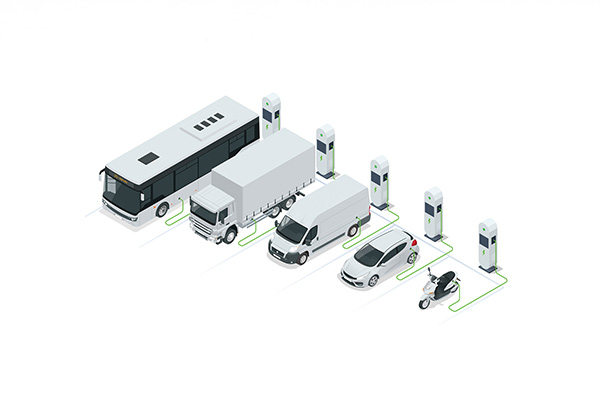
The relevance of this article is not limited to mainstream EV programmes. This same capability is directly applicable within both commercial and military contexts, which is particularly useful because vehicle electrification and hybridisation are not purely passenger-car topics. The same engineering challenges appear in specialist vehicles, construction equipment and defence-related platforms where durable, sealed and structurally sound enclosures are needed.
What buyers should look for in a battery enclosure supplier
For buyers and engineers, the key takeaway is that battery enclosure manufacture should not be reduced to simple fabrication capacity. The more important question is whether the supplier understands how fabricated aluminium structures, machined interfaces and sealing requirements work together. The strongest suppliers are those that can combine the structural efficiency of fabrication with the dimensional control of machining and the testing mindset needed for final performance.
Frequently Asked Questions
Why are battery enclosures often made from aluminium?
Aluminium offers a strong strength-to-weight ratio and is well suited to vehicle structures where mass, corrosion resistance and manufacturability matter.
Why is machining needed on a fabricated enclosure?
Critical sealing surfaces, interface points and mounting features often require tighter tolerances than fabrication alone can provide.
What is a hybrid battery enclosure?
A hybrid enclosure combines fabricated and machined elements rather than relying entirely on one route.
Why is post-machining important after welding?
Because welding heat can move the structure slightly, and post-machining restores the flatness and alignment needed for sealing and assembly.
Related Articles
Case Studies
Related Services
Speak to a Manufacturing Specialist today. Call 02476 370 272 or send us an email.
Speak to a manufacturing specialist.
Call us today on 02476 370 272 or email us at email@universalfabrications.com